
2017: Evaluation of Various Chemicals, Cruciferous Hosts, and Canola Cultivars to Manage Clubroot on Canola in Field Conditions
(Research Report, Langdon REC, December 2017)Objective 1: Evaluating the effects of adding fungicides and pH- altering soil amendments to soil of clubroot on canola incidence and severity in field conditions.
Nine treatments consisting of fungicides and various compounds (Table 1) that can alter pH or other characteristics of the soil were amended to soil and were compared with non-treated checks to evaluate their efficacy against clubroot pathogens under field conditions.
Treatments of wood ash, pellet lime, beetlime and gypsum were applied seven days before planting into the soil at a depth of three to four inches and thoroughly mixed in soil with a rototiller.
Whereas, the rest of the treatements were applied just before planting into the soil at a depth of three to four inches thoroughly mixed in the soil with a rototiller.
Table 1: List of products that were amended in soil to manage clubroot on canola
Product | Trade name |
| Dosage | ||||
|---|---|---|---|---|---|---|---|
Cyazofamid | Ranman |
| 7.5 l/ha | ||||
Fluazinam | Allegro |
| 2000 g/ha | ||||
PCNB | Terrachlor |
| 237 ml/plant as a drench | ||||
Wood ash | Fly Ash |
| 7.5 t/ha | ||||
Calcium Carbonate | Pellet Lime |
| 7.5 t/ha | ||||
Beet lime | Versa Lime |
| 15 t/ha | ||||
Gypsum | Gypsum |
| 7.5 t/ha | ||||
Nano-Particle | Zn |
| 500mg Zn | ||||
Non-Ionic surfactant | Aqua-Gro 2000 |
| 10g/m Incorporated into rows just before planting | ||||
Non-treated | Check |
|
| ||||
Variety: DKL 30-42 RR
Plot Size: 3 ft. x 5ft.
Planted on: 6/5/2017 (Hand planted after thorough tillage with a rototiller.)
Field Design: Randomized Complete Block Design (RCBD) with four replications.
Clubroot Evaluated on: 7/31/2017
Rating scale used: Clubroot rating scale: 0 = no galling; 1 = a few small galls (small galls on less than 1/3 of roots), 2 = moderate galling (small to medium-sized galls on 1/3 to 2/3 of roots), 3 = severe galling (medium to large-sized galls on more than 2/3 of roots) (S.E. Strelkov).
Figure 1: Efficacy of fungicides and soil ameliorating products against clubroot incidence in field conditions.

Figure 2: Efficacy of fungicides and soil ameliorating products against clubroot severity in field conditions.
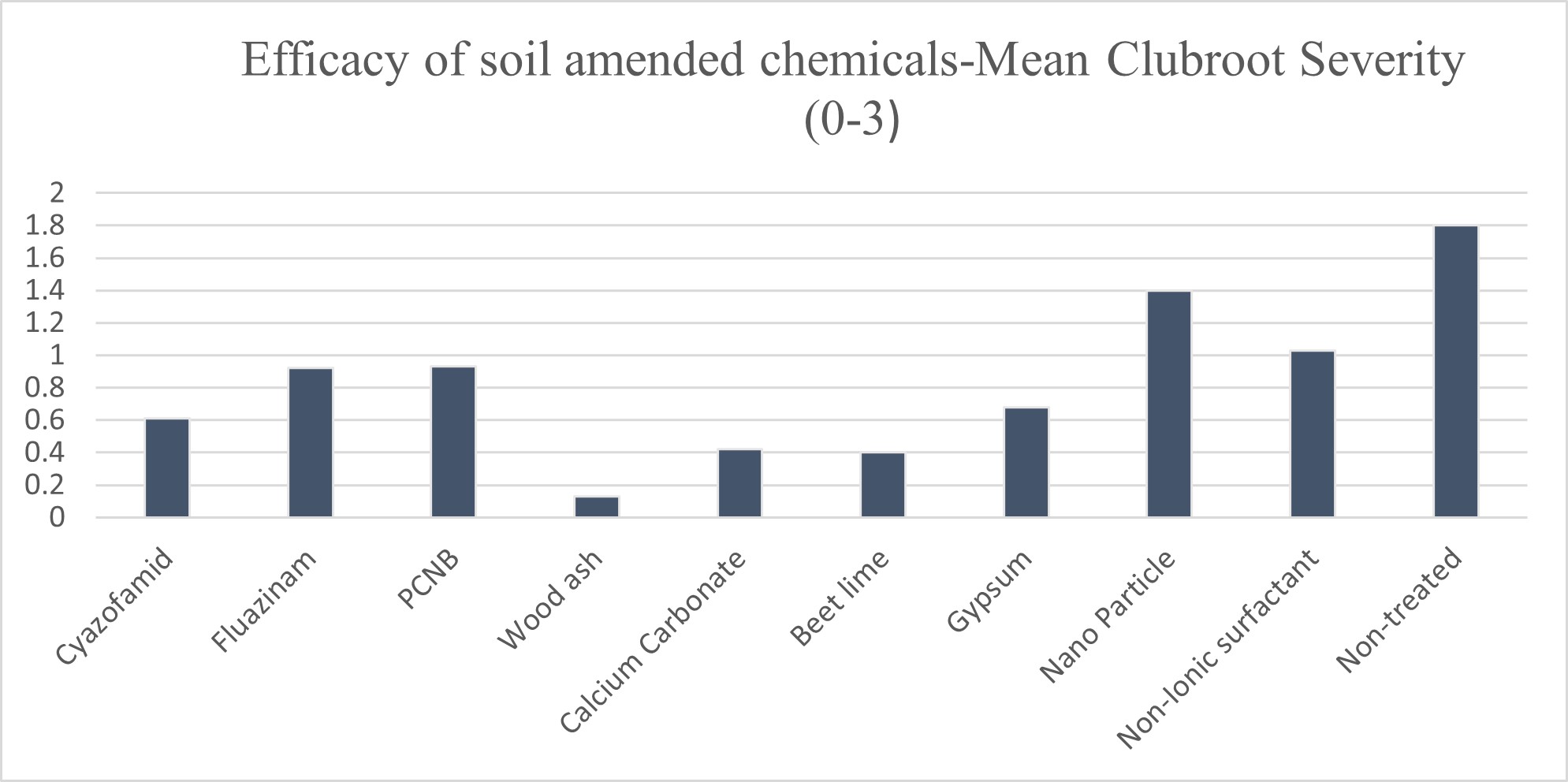
Figure 3: Soil pH before and after application of soil amendments to manage clubroot on canola.

Results: Significant differences in clubroot incidence and severity were observed in wood ash treatment followed by beet lime and calcium carbonate than the other treatments used. However, results of wood ash are debatable as the emergence was very poor in all four replications. In general emergence and growth of many crop plants cease at 8.5 pH. This could be one of the reasons for low emergence in wood ash treated plots. Beet lime (Versa lime) and calcium carbonate (Pellet lime) results are considerable. These results are worth testing for a few more seasons in field conditions. The pH changes from acidity to alkalinity of the soil in the treated plots after application of beet lime and versa lime can result in low clubroot disease incidence and severity.
Objective 2: Evaluating the symptoms caused by clubroot pathogen on various hosts of brassica family in field conditions.
Cruciferous host plants: Ten host plants from cruciferous family were planted
Plot Size: 3 ft. x 5ft.
Planted on: 6/5/2017 (Hand planted after thorough tillage with a rototiller.)
Field Design: Randomized Complete Block Design (RCBD) with four replications.
Clubroot Evaluated on: 7/31/2017
Figure 4: Mean clubroot incidence (%) on various cruciferous hosts.

Figure 5: Mean clubroot severity (%) on various cruciferous hosts.

Results: Out of the ten cruciferous hosts planted, seeds of shepherd’s purse did not germinate. The remaining nine host plants showed positive response to clubroot infection. The cruciferous host turnip had significantly less incidence of clubroot. More seasons of evaluations in field conditions are needed.
Objective 3: Evaluation of commercial canola cultivars against clubroot pathogen in field conditions.
Plot Size: 3 ft. x 5ft.
Nine commonly cultivated canola varieties have been planted along with an experimental line of canola (Table 2).
Table 2: Commonly cultivated canola varieties in Cavalier County.
|
| Clubroot |
|
|---|---|---|---|
S.No | Cultivar | Response | Source |
1 | DKL 30-42 | Susceptible | CHS |
2 | InVigor L252 | Susceptible | Grower |
3 | InVigor L233P | Susceptible | Grower |
4 | Integra 7150rr | Susceptible | Wilbur-Ellis |
5 | Integra 7257rr | Susceptible | Wilbur-Ellis |
6 | 45CS40 | CR | Pioneer |
7 | 45H33 | CR | Pioneer |
8 | InVigor L241C | CR | Bayer |
9 | Bayer Exptl. | CR | Bayer |
10 | Nexera 1022RR | CIR | Simplot |
Note:
CR: Clubroot resistant
CIR: Clubroot intermediately resistant
Planted on: 6/5/2017 (Hand planted after thorough tillage with a rototiller.)
Field Design: Randomized Complete Block Design (RCBD) with four replications.
Clubroot Evaluated on: 7/31/2017
Figure 6: Mean clubroot incidence (%) on various commercially available cultivars of canola.

Figure 7: Mean clubroot severity (%) on various commercially available cultivars of canola.

Note: Bayer Experimental variety is now available as InVigor© L255P in North Dakota.
Results: Canola cultivars 45H33 and an experimental line of canola (InVigor© L255P) showed zero percent in clubroot incidence and severity followed by low incidence (1%) and severity (0.75%) in canola cultivars “45CS40” and “InvigorL241C” and were significantly different from the other varieties tested.
Additional commercial cultivars to this list will be very helpful to the growers.
Acknowledgements:
Northern Canola growers Association for funding this trial.
Barry Coleman and NCGA Board Members
Greg Engel- Wilbur-Ellis
Dave Nowatzki- Pioneer
Jon Vanderberg- Bayer
Simplot Grower Solutions- Langdon
Dr. Brian Jenks- 线上赌博app
Nestor Majait and Justina Klindt- LREC Seasonal Workers
Industry personnel who supplied the chemicals.
Anitha Chirumamilla- Cavalier County Extension Agent (Evaluation assistance and photographs.)
Kishore Chittem (post doc)- Confirming clubroot positives molecularly.
