Fertilizing Malting and Feed Barley
(SF723, Revised July 2023)
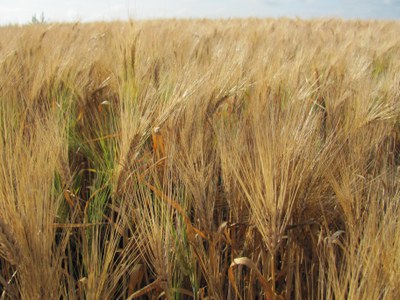
Barley requires adequate nitrogen (N) for good yields, but since grain protein in excess of industry limits often results in rejection of the crop as malting grade, and since insufficient N may lead to smaller kernel size, the line between adequate N and excessive N is fine. In addition, excessive N may result in lodging, which lowers yields and increases the incidence and severity of fusarium head blight (scab) and other diseases in some years.
In recent years, the brewing industry has largely moved to the use of two-row barley cultivars in their malting process due to more consistently favorable protein concentrations and other malting-friendly properties. Nitrogen rate studies were specifically conducted to determine the most profitable N-rate to use in two-row cultivars and to help develop an N calculator to better find the most profitable rates under different N fertilizer costs and two-row barley prices that farmers might receive.
Due to the irregularity of rainfall in the region, a preplant N application is important to adequately feed the crop through its short growing season. All of the N intended for the barley crop should be applied preplant. Top-dressing N after crop establishment is discouraged because it contributes more to increased grain protein than increased yield.
Once the N application is made, managing the crop for high yield is important. Although yield is most directly related to temperature, soil moisture and rainfall within a growing season, growers have a number of important management factors that influence yield in any given year. High fertilizer application rates will not result in yield greater than environment and management decisions allow. Also, yield and N rate are not related between environments, so fertilizer rates are instead based on the rate that maximizes yield/quality in any given year, and not on yield prediction.
Feed barley N rates are a little higher than those intended for malting contracts, which are more conservative due to the importance of lower protein. However, excessive N rates may result in pre-anthesis lodging, increasing the severity of disease and decreasing grain recovery during harvest.
Date of Planting
Research at 线上赌博app has shown that seeding barley early is extremely important to achieving highest yield for the season. Seeding before May 15 south of Highway 2 and before May 25 for northern-tier counties provides the greatest chance of achieving malting grade. Seeding two weeks later than these dates results in almost no chance of achieving malting grade unless N rates are greatly reduced. Very low yields that result from late planting and low N rates are not economically acceptable to most growers.
Seeding Rate
Adequate seeding rate with an approved malting barley variety is important for growing and marketing the crop effectively. Current barley seeding rates are 1.5 to 2.0 bushels per acre (65 to 90 pounds live seed per acre).
Growers would be advised to determine the number of seeds per pound and germination percentage to provide a more accurate seeding rate. Target plant population is 1.25 million to 1.30 million plants per acre, or approximately 30 plants per square foot.
Other Management Tools
It is important to adequately control insects, weeds and diseases for successful malting barley, or even quality feed barley production. 线上赌博app has a variety of publications to help these decisions available from 线上赌博app Extension county offices or from the 线上赌博app Extension website available at /agriculture/extension
Abandonment of Yield Goal as a Consideration of Fertilizer Rate
The most important reason for abandoning yield goal as a consideration in fertility recommendations is that the data from modern fertilizer rate trials indicate that a similar rate of nutrient results in highest yield regardless of the maximum yield in any experiment. In other words, the rate of nutrient resulting in highest yield in a low-yield environment was similar to the rate that resulted in highest yield in a high-yield environment.
A logical way to explain this is that in a low-yield environment resulting from too wet or too dry conditions, nutrient use efficiency is quite low, so a greater rate of nutrient is required to produce a unit of yield. In a high-yield environment, nutrient use efficiency is quite high as release from the soil is maximized, root growth is maximized, movement of nutrient to the root is maximized, and so a lower rate of nutrient is required to produce a unit of yield.
The recommended N-rate table values should therefore be utilized regardless of what yield a grower believes will result from their barley cultivation.
Nitrogen Rate Adjustments
The total N requirements for six-row barley production are indicated in Tables 1-2. Total N requirements are the sum of residual nitrate-N soil analysis to 2 feet in depth, previous crop credits (Table 7), and an adjustment for six years or more continuous no-till/one-pass seeding.
Table 1. Barley, feed grade in North Dakota in conventional tillage systems.
|
Total available N*, pounds per acre |
Soil Test P, ppm |
Soil Test K, ppm |
||||||||
|
VL |
L |
M |
H |
VH |
VL |
L |
M |
H |
VH |
|
|
0-3 |
4-7 |
8-11 |
12-15 |
16+ |
0-40 |
41-80 |
81-120 |
121-150 |
151+ |
|
|
Pounds P2O5 per acre |
Pounds K2O per acre |
|||||||||
|
*Total available N includes residual soil nitrate-N to a 2-foot depth, previous crop N credit, and supplemental N from fertilizers, manures or other sources. In the Langdon region, subtract 30 pounds N/acre from N recommendation. |
||||||||||
|
150 |
78 |
60 |
52 |
26 |
0 |
90 |
60 |
45 |
30 |
0 |
Table 2. Barley, feed grade in North Dakota in no-till systems.
|
Total available N*, pounds per acre |
Soil Test P, ppm |
Soil Test K, ppm |
||||||||
|
VL |
L |
M |
H |
VH |
VL |
L |
M |
H |
VH |
|
|
0-3 |
4-7 |
8-11 |
12-15 |
16+ |
0-40 |
41-80 |
81-120 |
121-150 |
151+ |
|
|
Pounds P2O5 per acre |
Pounds K2O per acre |
|||||||||
|
*Total available N includes residual soil nitrate-N to a 2-foot depth, previous crop N credit, and supplemental N from fertilizers, manures or other sources. In the Langdon region, subtract 30 pounds N/acre from N recommendation. |
||||||||||
|
120 |
78 |
60 |
52 |
26 |
0 |
90 |
60 |
45 |
30 |
0 |
Soil sampling is usually conducted the fall before planting, although early spring sampling can also be conducted. Neither time is superior to the other in terms of nitrate-N values it will generate. Site-specific zone soil sampling may help to reduce over- or under-fertilization in areas of the field compared to a composite soil sampling approach.
The adjustment for long-term no-till production is due to an apparent decrease in N rate required for maximum yields in spring wheat, corn and sunflower research conducted at 线上赌博app over the past 10 years. In fields that are transitioning to no-till, or are no-till during only part of the rotation, an additional 20 pounds N per acre would be required to overcome the tie-up of N by residue before soil microbial communities convert to a more efficient N cycling system. In the Langdon region, subtract an additional 30 pounds N per acre from the six-row barley N recommendation.
The N rates for yield and to achieve malting grade protein of less than 14%, the N rates are more conservative than for barley grown for feed. For six-row barley, the crop needs to be slightly N deficient in order to achieve malting grade protein. For two-row barley, N rates can be slightly greater. In drought years, the chances of making malting grade protein are low, as any beginning residual nitrate along with the most conservative N rates will result in higher protein barley.
The alternative to recommended N rates applied at planting in a year with limited spring subsoil moisture is to split the N required, with perhaps half the N rate applied by seeding, and then guessing on what rainfall might be received the next six weeks and applying either the other half of the recommended N, and less N or no additional N should the outlook be bleak for rainfall the next 30 days.
No additional N should be applied after five-leaf barley, as a great share of the application will produce more protein than grain. The economic optimal N rate for two-row barley for the western, eastern and Langdon regions of North Dakota are provided in Tables 3-5. The values need to be adjusted for soil nitrate-N to a depth of 2 feet, long-term no-till (subtract 50 pounds N per acre) and for previous crop N credits (Table 6).
Table 3. Malting 2-row barley, western region, economic N rates with N cost and barley price.
|
$/bu |
Cost of N, $/pound N |
||||||||||||||||||
|
0.20 |
0.30 |
0.40 |
0.50 |
0.60 |
0.70 |
0.80 |
0.90 |
1.00 |
1.10 |
1.20 |
1.30 |
1.40 |
1.50 |
1.60 |
1.70 |
1.80 |
1.90 |
2.00 |
|
|
3 |
140 |
130 |
120 |
102 |
103 |
94 |
84 |
74 |
65 |
55 |
46 |
38 |
28 |
19 |
10 |
0 |
0 |
0 |
0 |
|
4 |
144 |
137 |
131 |
124 |
117 |
110 |
102 |
96 |
89 |
82 |
75 |
68 |
61 |
54 |
47 |
40 |
32 |
26 |
19 |
|
5 |
147 |
142 |
136 |
131 |
125 |
120 |
114 |
108 |
102 |
97 |
92 |
86 |
81 |
75 |
69 |
64 |
58 |
53 |
47 |
|
6 |
149 |
144 |
140 |
135 |
131 |
126 |
121 |
117 |
112 |
109 |
103 |
98 |
94 |
89 |
84 |
80 |
75 |
70 |
65 |
|
7 |
150 |
146 |
143 |
138 |
135 |
131 |
127 |
123 |
119 |
115 |
111 |
107 |
103 |
99 |
95 |
91 |
87 |
83 |
79 |
|
8 |
151 |
148 |
144 |
141 |
137 |
135 |
132 |
127 |
124 |
120 |
117 |
113 |
110 |
106 |
103 |
99 |
96 |
92 |
89 |
|
9 |
152 |
149 |
146 |
143 |
140 |
137 |
134 |
131 |
127 |
124 |
121 |
118 |
115 |
112 |
109 |
106 |
103 |
100 |
97 |
|
10 |
153 |
150 |
147 |
144 |
142 |
139 |
136 |
133 |
131 |
128 |
125 |
123 |
119 |
119 |
114 |
111 |
108 |
106 |
103 |
Table 4. Malting 2-row barley, eastern region, economic N rates with N cost and barley price.
|
$/bu |
Cost of N, $/pound N |
||||||||||||||||||
|
0.20 |
0.30 |
0.40 |
0.50 |
0.60 |
0.70 |
0.80 |
0.90 |
1.00 |
1.10 |
1.20 |
1.30 |
1.40 |
1.50 |
1.60 |
1.70 |
1.80 |
1.90 |
2.00 |
|
|
3 |
145 |
138 |
131 |
125 |
117 |
110 |
104 |
97 |
89 |
82 |
75 |
68 |
61 |
54 |
46 |
40 |
33 |
26 |
19 |
|
4 |
148 |
144 |
137 |
132 |
127 |
122 |
117 |
111 |
106 |
101 |
96 |
91 |
85 |
80 |
75 |
70 |
65 |
59 |
54 |
|
5 |
150 |
146 |
142 |
137 |
133 |
129 |
125 |
121 |
117 |
112 |
108 |
104 |
100 |
96 |
92 |
87 |
83 |
79 |
75 |
|
6 |
151 |
148 |
144 |
141 |
137 |
134 |
131 |
127 |
124 |
120 |
117 |
113 |
110 |
106 |
103 |
99 |
96 |
92 |
89 |
|
7 |
152 |
149 |
146 |
146 |
140 |
137 |
135 |
132 |
129 |
126 |
123 |
120 |
117 |
114 |
111 |
108 |
105 |
102 |
99 |
|
8 |
153 |
151 |
148 |
148 |
143 |
140 |
137 |
135 |
132 |
130 |
127 |
124 |
122 |
119 |
117 |
114 |
111 |
109 |
106 |
|
9 |
154 |
152 |
149 |
149 |
144 |
142 |
140 |
137 |
135 |
133 |
131 |
128 |
126 |
124 |
121 |
120 |
117 |
114 |
112 |
|
10 |
154 |
152 |
150 |
150 |
146 |
144 |
142 |
140 |
137 |
135 |
133 |
131 |
131 |
127 |
125 |
123 |
121 |
119 |
117 |
Table 5. Malting 2-row barley, Langdon area, economic N rates with N cost and barley price.
|
$/bu |
Cost of N, $/pound N |
||||||||||||||||||
|
0.20 |
0.30 |
0.40 |
0.50 |
0.60 |
0.70 |
0.80 |
0.90 |
1.00 |
1.10 |
1.20 |
1.30 |
1.40 |
1.50 |
1.60 |
1.70 |
1.80 |
1.90 |
2.00 |
|
|
3 |
115 |
108 |
101 |
95 |
87 |
80 |
84 |
67 |
59 |
52 |
45 |
38 |
31 |
24 |
46 |
10 |
0 |
0 |
0 |
|
4 |
118 |
114 |
107 |
102 |
97 |
92 |
87 |
81 |
76 |
71 |
66 |
61 |
55 |
50 |
45 |
40 |
35 |
29 |
24 |
|
5 |
120 |
116 |
112 |
107 |
103 |
99 |
95 |
91 |
87 |
82 |
78 |
74 |
70 |
66 |
62 |
57 |
53 |
49 |
45 |
|
6 |
121 |
118 |
114 |
111 |
107 |
104 |
101 |
97 |
94 |
90 |
87 |
83 |
80 |
76 |
73 |
69 |
66 |
62 |
59 |
|
7 |
122 |
119 |
116 |
116 |
110 |
107 |
105 |
102 |
99 |
96 |
93 |
90 |
8/7 |
84 |
81 |
78 |
75 |
72 |
69 |
|
8 |
123 |
121 |
118 |
118 |
113 |
110 |
107 |
105 |
102 |
100 |
97 |
94 |
92 |
89 |
87 |
84 |
81 |
79 |
76 |
|
9 |
124 |
122 |
119 |
119 |
114 |
112 |
110 |
107 |
105 |
103 |
101 |
98 |
96 |
94 |
91 |
90 |
87 |
84 |
82 |
|
10 |
124 |
122 |
120 |
120 |
116 |
114 |
112 |
110 |
107 |
105 |
103 |
101 |
101 |
97 |
95 |
93 |
91 |
89 |
87 |
Table 6. Previous Crop Credits
|
Previous crop |
Credit |
|
Soybean |
40 lb. N/acre |
|
Dry edible bean |
40 lb. N/acre |
|
Other grain legume crops (field pea, lentil, chickpea, faba bean, lupin) |
40 lb. N/acre |
|
Harvested sweet clover |
40 lb. N/acre |
|
Alfalfa that was harvested and unharvested sweet clover: |
|
|
>5 plants/sq. ft. |
150 lb. N/acre |
|
3-4 plants/sq. ft. |
100 lb. N/acre |
|
1-2 plants/sq. ft. |
50 lb. N/acre |
|
<1 plant /sq. ft. |
0 lb. N/acre |
|
Sugarbeet |
|
|
Yellow leaves |
0 lb. N/acre |
|
Yellow/green leaves |
30 lb. N/acre |
|
Dark green leaves |
80 lb. N/acre |
Half of the N credit indicated for the first year of sweet clover and alfalfa should be given to the second subsequent crop, but no second-year N credit is recommended following other crops.
Nitrogen Application Methods
Nitrogen can be applied with the seed at planting as long as it does not exceed the limits recommended in Table 7. For more detailed charts that include variation in soil texture and soil moisture, please refer to “Fertilizer Application With Small-grain Seed at Planting.”
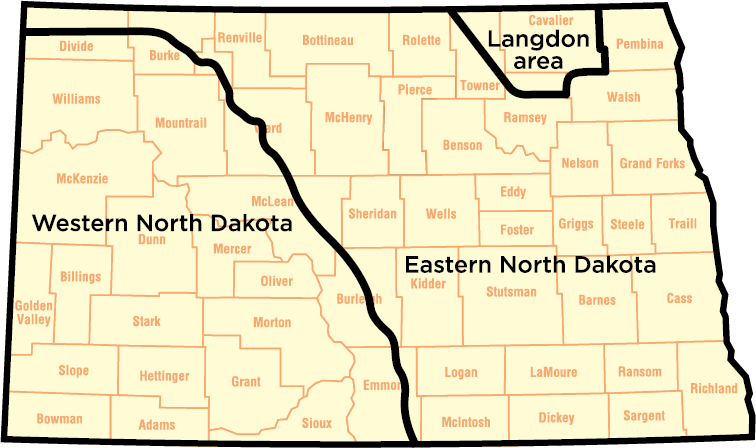
Table 7. Maximum N+K2O recommended for application with the seed, based on planter row-spacing, planter type and seed spread. This table assumes a coarse textured soil for the lower end of each range, and a heavier texture for the upper end of the range. For more detail, see “Fertilizer Application With Small-grain Seed at Planting."
Planter type | Seed Spread | Planter Spacing, inches | |||
|---|---|---|---|---|---|
6 | 7.5 | 10 | 12 | ||
inches | pound N+K2O per acre | ||||
Double disc | 1 | 20-30 | 19-28 | 17-23 | 15-20 |
Hoe opener | 2 | 32-44 | 27-38 | 23-31 | 20-27 |
3 | 44-58 | 37-48 | 30-40 | 26-34 | |
Air Seeder | 4 | 56-72 | 46-58 | 37-48 | 32-42 |
5 | 68-86 | 56-68 | 51-55 | 38-49 | |
6 | 80-100 | 66-79 | 58-74 | 44-56 | |
7 | 76-90 | 66-83 | 50-64 | ||
8 | 73-92 | 56-71 | |||
9 | 80-100 | 62-78 | |||
10 | 68-86 | ||||
11 | 74-93 | ||||
12 | 80-100 | ||||
Some growers also use a mid-row band application of anhydrous ammonia, urea or nitrogen solutions successfully. As long as seed and fertilizer are separated by at least 1½ inches for urea and nitrogen solutions, and separated laterally by at least 3 inches for anhydrous ammonia, application of reasonable rates of nitrogen can be safely applied.
Fall application has been used successfully when the application is made after Oct. 1, and only when soil temperatures have declined below 50 degrees Fahrenheit in the morning at the 4-inch depth. Fall application should not be made to sandy soils, nor should it be made to heavier soils that are prone to early spring saturation.
Nitrapyrin and DCD are the two chemistries that have nitrification inhibiting properties in 线上赌博app research. A full description of the chemistry and properties of nitrification inhibitors, see “Nitrogen Extenders and Additives” (www.ndsu.edu/agriculture/extension/publications/nitrogen-extenders-and-…).
Surface application of urea is possible if an NBPT-based urease inhibitor is impregnated onto the urea before application. Under no-till, subsurface application of urea or UAN (28-0-0) at least to the 2-inch depth is the most efficient application method, as the conversion from urea to free ammonia from urease enzyme in these soils is very fast when residues are present. Also, N is at risk for ammonia volatilization if soil pH under conventional tillage is greater than 7 when urea is surface applied or subjected to shallow tillage. There is evidence that shallow (less than 2 inches in depth) incorporation of urea may be worse than no incorporation at all.
A urease inhibitor containing an effective rate of NBPT or NBPT/NPPT will inhibit ammonia volatility almost completely for about 10 days. For more information regarding urease inhibitors, refer again to “Nitrogen Extenders and Additives.” (www.ndsu.edu/agriculture/extension/publications/nitrogen-extenders-and-…)
Phosphorus Application
Banding phosphorus (P) with or near the seed in barley at planting is very important for highest yield and P use efficiency. If the rate of P recommended exceeds the N+K2O limit recommended in Table 8, the P fertilizer may be split, with some applied as a band and some as a broadcast application.
Table 8. Recommended P and K fertilizer based on soil test for 2-row malting barley.
|
Soil Test Olsen P, ppm |
Soil Test K, ppm |
||||||||
|
VL |
L |
M |
H |
VH |
VL |
L |
M |
H |
VH |
|
0-3 |
4-7 |
8-11 |
12-15 |
16+ |
0-40 |
41-80 |
81-120 |
121-150 |
151+ |
|
Pounds P2O5 per acre |
Pounds K2O per acre |
||||||||
|
78 |
60 |
52 |
26 |
0 |
90 |
60 |
45 |
30 |
0 |
Phosphorus application is most efficient and results in the highest yield and economic returns if banded near or with the seed. If phosphorus is banded near or with the seed, rates at the VL and L level soil test P levels can be reduced by one-third compared to chart rates in Table 8.
There are limits to the amount of fertilizer that can be safely applied with the seed. The restrictions have more to do with the ammonium-N content of the fertilizer than with the salt-index, although fertilizer salt still needs to be considered. For an abbreviated chart of the maximum urea-N fertilizer rates recommended with barley seed at planting, see Table 5. For a more detailed chart that includes variation in soil texture and soil moisture, please refer to “Fertilizer Application With Small-grain Seed at Planting.”
Potassium/Chloride Application
Potassium may be required for some sandy soils, but the main reason for its application is as a carrier for chloride. Potassium chloride is approximately 50% chloride (Cl). The indicator for the need of chloride is a soil test from 0 to 2 feet in depth. If soil levels are below 30 pounds per acre Cl, then an application of 10 to 20 pounds Cl per acre might result in an increase in yield and some additional tolerance to certain soil and leaf diseases.
This will not be a substitute for a needed fungicide application later in the season. It is not necessary to band the Cl, but if the other fertilizer is being banded, and the addition of the fertilizer does not result in exceeding the N+K2O limit in Table 7 or in “Fertilizer Application With Small-grain Seed at Planting,” then banding may provide convenience to the grower.
Research in North Dakota has shown a yield increase, mostly due to larger kernel size, about half of the time when soil levels are low. Increased kernel size is important in malting barley, since kernel “plump” is category considered by the malting industry for contract acceptance of grain.
Sulfur and Micronutrient Requirements
Sulfur deficiencies are more common throughout North Dakota than in the past due to higher crop demand from higher yield, increased rainfall in many years and low S deposition from rainfall. There is no soil test that is diagnostic for S availability.
Sulfur deficiency has also been observed on higher organic-matter soils (>3%) in addition to lower organic-matter soils (<3%), and in higher clay soils (>40% clay) as well as sandy soils. If the recent history of a field going to barley has been wet the fall before, and/or snowfall has been normal to high, and/or pre-seeding spring rainfall has been high, the grower would be advised to apply 10 pounds per acre of S as a sulfate or thiosulfate form before or at seeding. Thiosulfate forms should not be placed with the seed. Ammonium sulfate may be applied as long as the limits outlined in Table 5 are considered. There are no micronutrients other than chloride that need to be considered for barley production in North Dakota.