Pollination in Vegetable Gardens and Backyard Fruits
(H1898, Reviewed December 2023)This publication summarizes the process of pollination in different vegetables and fruits grown by the backyard gardeners of North Dakota. Successful pollination is needed for fruit or berry production. The role of pollinators in growing vegetables and fruits is summarized as well as best management practices to attract and protect pollinators.
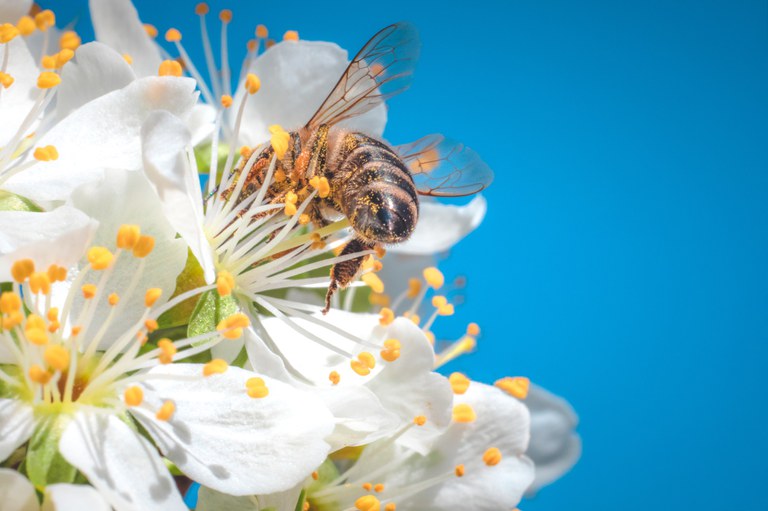
Bees are important insect pollinators for bountiful home vegetable gardens and backyard fruits. European honey bees and native bees, such as bumble bees, help ensure fruit set and higher yields. Learning about the process of pollination can help smart gardeners attract and safeguard these important insects.
What is Pollination?
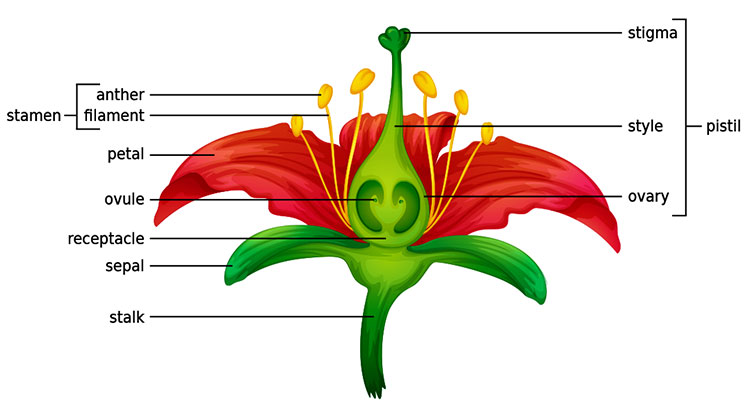
Pollination is the deposit of pollen grains from the anther (male structure) onto the pistil (female structure) of the same plant species (Figure 1). Pollen can be transferred within an individual flower or between separate flowers. Successful pollination results in the production of viable seeds and a fruit.
Most crop plants are pollinated by insects or wind. Many agronomic crops, such as wheat and corn, rely on wind pollination. In contrast, many fruits and vegetables require or benefit from insect pollination. Common insect pollinators include bees, butterflies and flies. Of these pollinators, bees are the most important in the home garden.
Role of Pollinators in the Vegetable Garden
Common plants in the cucurbit family include garden favorites such as cucumbers, squash, zucchini, pumpkins, watermelon and muskmelon. Most cucurbits depend on bee pollination because each plant produces separate male and female flowers rather than having both sets of reproductive parts in each flower.
Such flowers are called “imperfect.” Bees are essential to cross-pollinate, or carry pollen from the male flower to the receptive female flower.
The cucurbit male flower contains three to five stamens with pollen-producing anthers. The female flower produces a single style with three stigmas. The easiest way to distinguish between the two flower sexes is to look for an ovary below the yellow petals. Female flowers have a swollen ovary, or fruit, and male flowers do not (Figure 2).
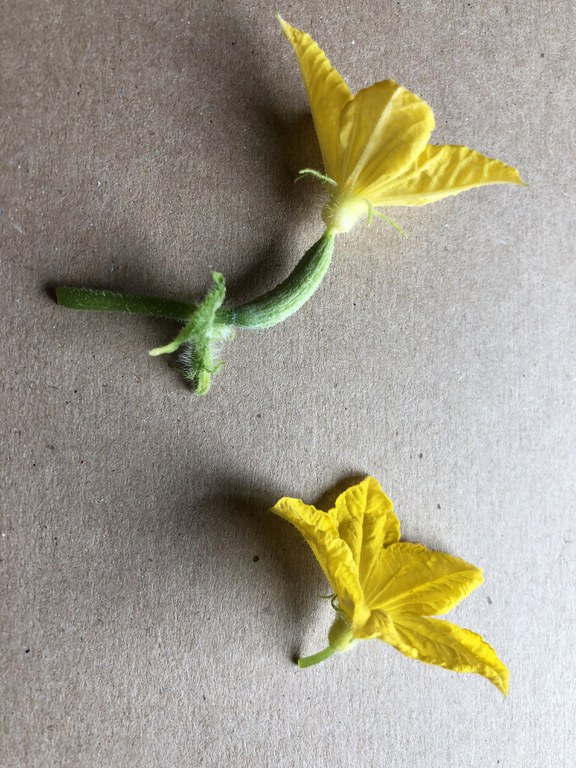
Gardeners frequently ask why they have so many flowers on their cucumbers but no fruit set. Look closely at the flowers to answer this question. In many cucumber cultivars, the first set of flowers are all male, which do not bear fruit. Male and female flowers then will be produced in the second wave of blooms.
If female flowers are present but no fruit develops, then the problem may be a lack of pollinators. In the short term, you can fill the role of the bee with hand-pollination.
Take a clean paintbrush and insert it into the male flower to gather pollen. Then transfer pollen to the stigmas of an open female flower. Hand-pollination works best in the morning. For a long-term solution, create pollinator habitat near or in the garden to attract bees.
In contrast to cucurbits, Soloanaceae crops such as tomatoes, peppers and eggplants produce “perfect” flowers that contain male and female reproductive structures. Flower anatomy differs from the idealized image in Figure 1.
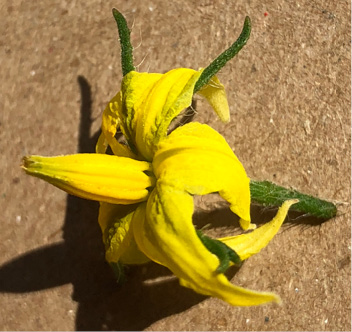
Tomato anthers form a tube that completely surrounds the pistil (Figure 3a). In Figure 3b, the anthers are partially removed to reveal the pistil.
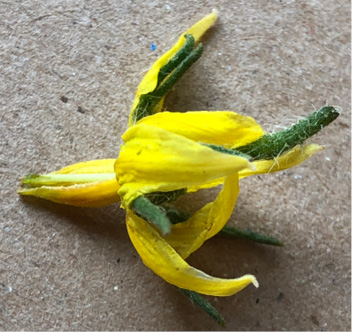
Tomatoes, peppers and eggplants can be pollinated simply by wind shaking the pollen from the anthers onto the stigma. However, bumble bees can improve fruit set and size because they vibrate the flowers and shake pollen loose from the anthers.
Leafy greens (lettuce, spinach, arugula), cole crops (cabbage, broccoli, cauliflower, kale), root crops (carrots, beets, radishes, onions), legumes (peas, beans) and tuber crops (potatoes) do not require bees to produce an edible harvest.
Resources
McGinnis, E., J. Knodel and T. Weinmann. 2016. Bee-utiful Landscapes: Building a Pollinator Garden. 线上赌博app Extension publication No. H1811. www.ndsu.edu/agriculture/extension/publications/bee-utiful-landscapes-building-pollinator-garden-0
Gibbs, J., A. Bennett, R. Isaacs and J. Landis. 2015. Bees of the Great Lakes region and wildflowers to support them. Michigan State University Extension publication No. E3282. www.canr.msu.edu/resources/bees_of_the_great_lakes_region_and_wildflowers_to_support_them_e3282
This publication is supported in part by the Crop Protection and Pest Management Program [grant no. 2017-70006-27144/accession 1013592] from the U.S. Department of Agriculture (USDA) National Institute of Food and Agriculture. Any opinions, findings, conclusions or recommendations expressed are those of the authors and do not necessarily reflect the view of the USDA.
线上赌博app Extension does not endorse commercial products or companies even though reference may be made to tradenames, trademarks or service names. 线上赌博app encourages you to use and share this content, but please do so under the conditions of our Creative Commons license. You may copy, distribute, transmit and adapt this work as long as you give full attribution, don’t use the work for commercial purposes and share your resulting work similarly. For more information, visit www.ag.ndsu.edu/agcomm/creative-commons.

For more information on this and other topics, see www.ndsu.edu/extension
County commissions, North Dakota State University and U.S. Department of Agriculture cooperating. 线上赌博app does not discriminate in its programs and activities on the basis of age, color, gender expression/identity, genetic information, marital status, national origin, participation in lawful off-campus activity, physical or mental disability, pregnancy, public assistance status, race, religion,
sex, sexual orientation, spousal relationship to current employee, or veteran status, as applicable. Direct inquiries to Vice Provost for Title IX/ADA Coordinator, Old Main 201, 线上赌博app Main Campus, 701-231-7708, ndsu.eoaa@ndsu.edu. This publication will be made available in alternative formats for people with disabilities upon request, 701-231-7881. 1.764M-8-18; web-12-23