
2025 Extension Soybean Pathology Field Research Reports
(PP2290, January 2026)North Dakota Soybean Disease Summary - 2025
Brown Stem Rot
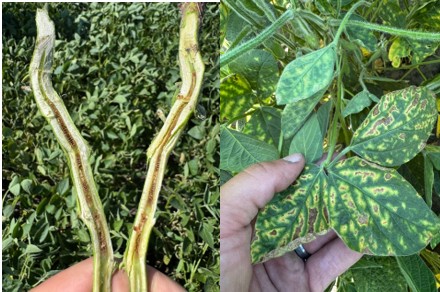
Brown stem rot, caused by the fungus Cadophora gregata, is a vascular disease of soybean that primarily infects and colonizes the stem pith. This disease can reduce plant vigor, cause premature leaf death and lead to notable yield losses, especially when infections align with environmental stress such as cool, wet conditions early in the season. The pathogen survives in soybean residue, infects roots early in the growing season and progresses systemically up the plant, with symptoms typically becoming evident during mid- to late-reproductive growth stages. During 2025, brown stem rot was observed across eastern North Dakota in early August, but did not develop to severe levels, resulting in minimal yield impacts.
Frogeye Leaf Spot
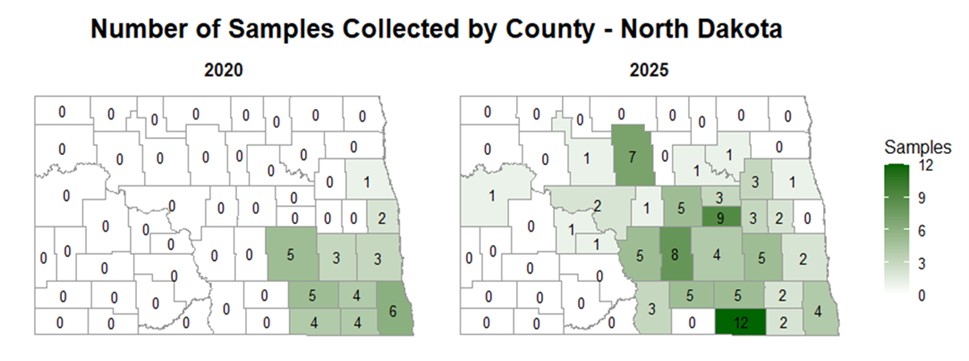
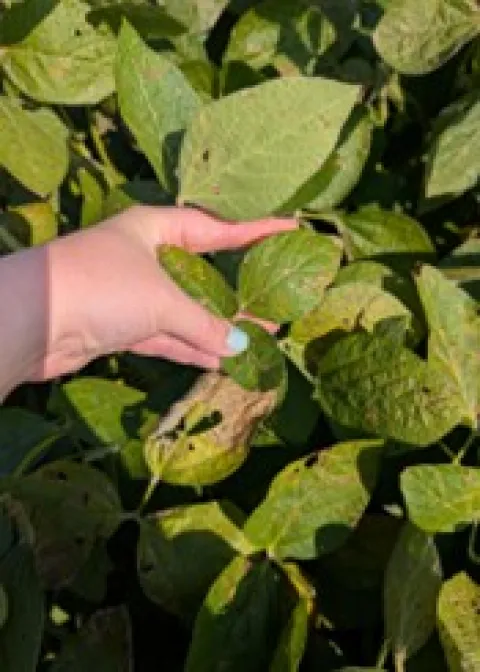
Frogeye leaf spot, caused by the fungus Cercospora sojina, is a foliar disease of soybean that produces characteristic circular lesions with dark borders and light centers. This disease can significantly reduce the total photosynthetic area, weaken plants and lead to measurable yield losses, particularly in susceptible varieties under warm, humid conditions. The pathogen overwinters in infected residue, produces spores during periods of leaf wetness and spreads via wind and rain splash, leading to repeated cycles of infection throughout the growing season. Frogeye leaf spot has been increasing in prevalence and severity since its first identification in North Dakota in 2020. In 2025, frogeye leaf spot was identified in 28 counties in North Dakota through our field scouting. However, yield impacts were minimal.
Soybean Cyst Nematode
Soybean cyst nematode (SCN), caused by Heterodera glycines, is the most economically damaging soybean disease in North America and parasitizes soybean roots by forming specialized feeding sites. This pest reduces yield by impairing root growth, limiting nutrient and water uptake and causing hidden yield loss even in the absence of obvious above-ground symptoms. The nematode survives in soil as long-lived cysts, hatches in response to soybean root exudates and completes multiple reproductive cycles per season, allowing populations to build rapidly under favorable conditions.
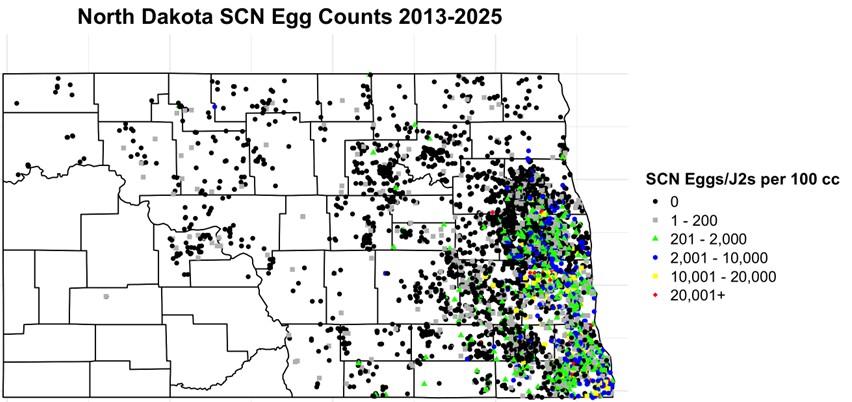
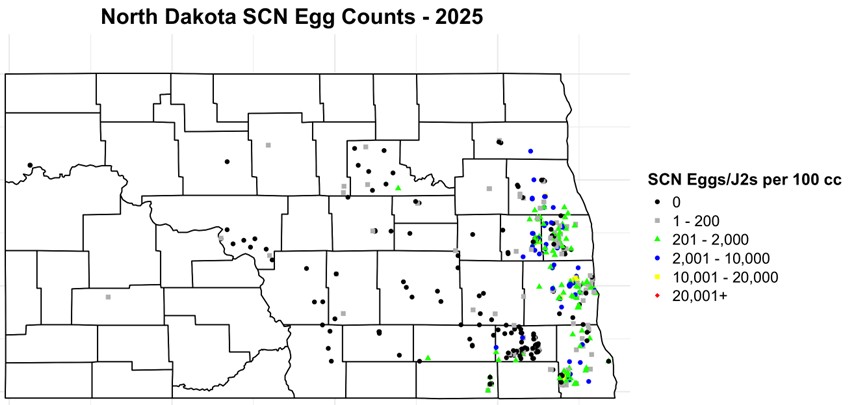
In the 2025 Soybean Cyst Nematode Sampling Program, a total of 466 soil samples were received and processed. From these samples, 40% were found to have no SCN present, 20% of samples had 1-200 SCN eggs + J2/100cc, 23% had 201-2,000 SCN eggs + J2/100cc, 15% had 2,001-10,000 SCN eggs + J2/100cc, 2% had 10,001-20,000 SCN eggs + J2/100cc and only one sample had greater than 20,000 SCN eggs + J2/100cc. The 2025 SCN figures are provided below.


White Mold
White mold, caused by the fungus Sclerotinia sclerotiorum, is a stem disease of soybean characterized by white, cottony mycelium and the formation of black sclerotia on or within infected tissues. This disease can lead to severe yield losses by killing branches or entire plants, reducing pod set and limiting canopy development, especially in cool, wet and dense canopies that favor infection. The pathogen overwinters as sclerotia in soil, which germinate to produce apothecia that release ascospores, and infections occur when these spores land on senescing flowers during periods of extended moisture.
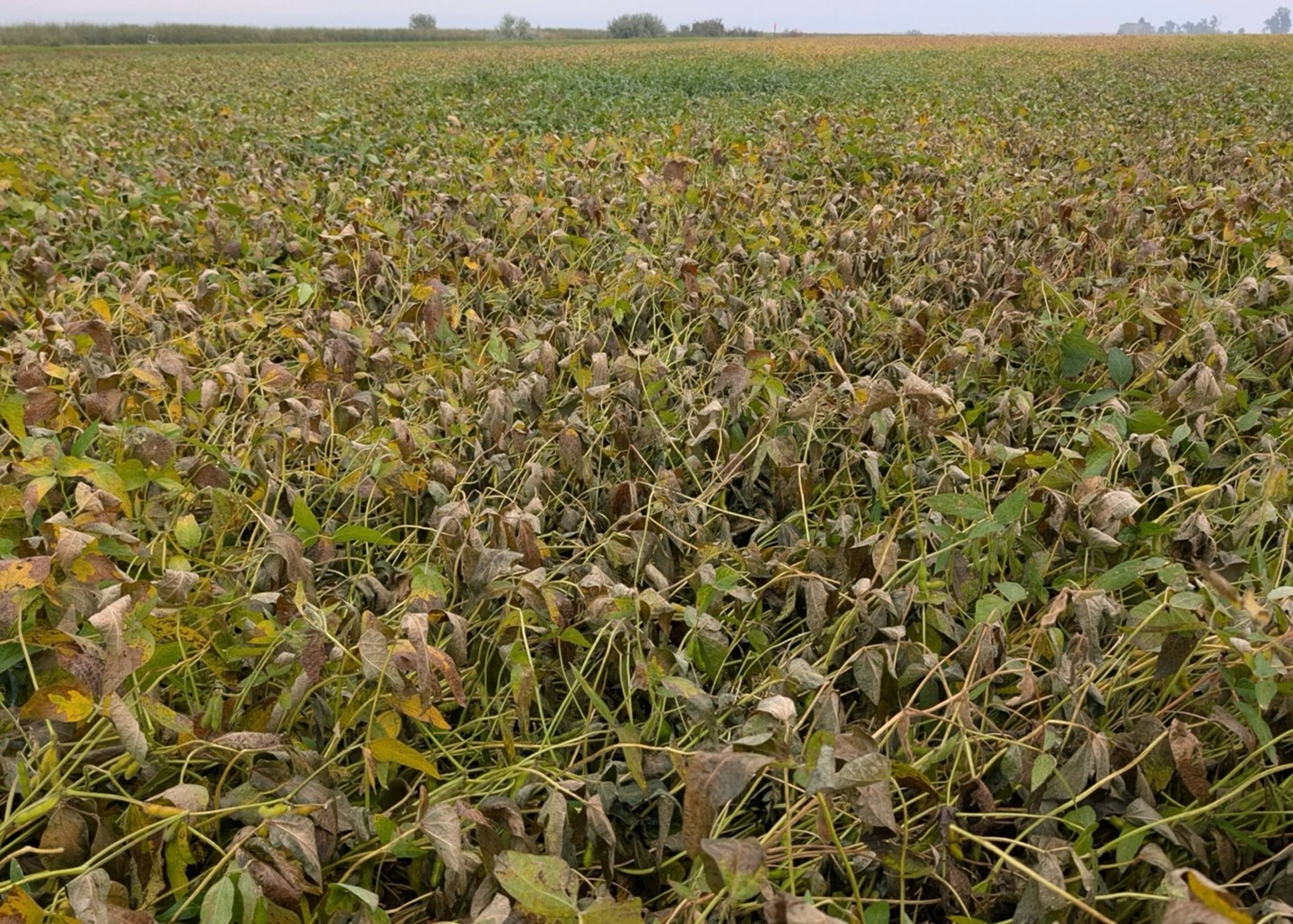
In 2025, environmental conditions were highly conducive to disease development, with high humidity, consistent precipitation and moderate temperatures less than 75 degrees Fahrenheit during the flowering growth stages (R1-R3). These conditions are outlined by the new NDAWN Soybean White Mold Risk Maps from three dates during flowering. As a result, white mold severity was high, and yield losses across North Dakota are estimated to be higher than in previous years. In addition to yield losses, severe white mold years are also known to increase the amount of new inoculum in the soil for future years, increasing the risk of disease development in future years.
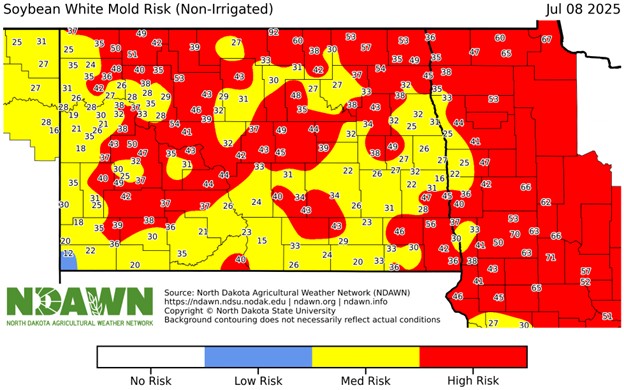
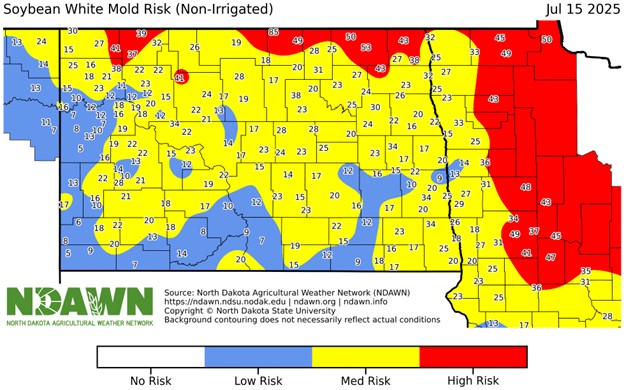
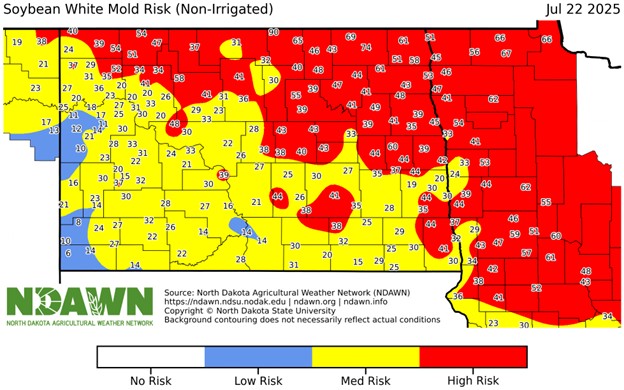
Each number on the map represents a single weather station from which weather data is pulled. These numbers represent the risk probability (%) of the apothecia (white mold mushrooms) forming on the soil surface. High risk is defined as “Red” and is when a fungicide application is recommended if canopy closure has occurred and flowers are present. Medium risk is defined as “Yellow” and indicates when to be cautious of environmental conditions and potentially prepare to make a fungicide application. If you are growing highly susceptible soybeans in a field with a long history of white mold, fungicide applications may be warranted in the medium risk “Yellow.” Low risk is defined as “Blue,” and fungicide applications are not recommended. NDAWN Soybean White Mold Risk Maps are available here. Be sure to stop back next season to evaluate white mold risk.
Experimental Designs
All experiment treatments are represented multiple times within reps for each experiment. A rep indicates how many times each treatment appears in an experiment (e.g., if an experiment has four reps, each treatment will appear four times in the experiment). Where the treatments are planted is often randomized within experiments to limit the amount of variation among treatments within the same rep. The type of variation that we attempt to reduce within each experiment includes, but is not limited to, environmental variation, soil variation, etc. To randomize where treatments are planted, we utilize a software called Agriculture Research Manager (ARM), which is one of the most commonly used programs when conducting crop protection research. Plots can vary in size from experiment to experiment, but a common size used in soybean disease research is 10 feet wide by 20 feet long. Treatments are given numbers within experiments to help with randomization and efficiency. An example is provided below.
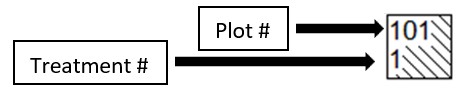
This image represents a single plot from ARM, including the plot number and treatment number. Plot numbers often start with 101, but this can vary depending on the research program. Treatment numbers often start with 1.
Randomized Complete Block Design
A randomized complete block design (RCBD) is an experimental design that randomizes experiment treatments within reps and divides reps using blocks. Treatment location is randomized within each rep, and the experiment is planted with the intent to minimize variation (e.g., environmental, soil) within a rep and maximize variation across reps. It is important to minimize variation within reps to ensure a fair comparison of treatments within that rep. To put this in a different perspective, if you were to plant half of a rep in a wet portion of the field and the other half of a rep in a dry portion, the environment would have a large amount of variation within that rep. Due to the large variation that would be present in this example, the way individual treatments perform could be heavily influenced by the environment and, therefore, make it appear as if some treatments work better than others when in reality that may not be the case. In the example below, there is an experiment that has five treatments and six reps. Each treatment is represented six times, once within each rep.
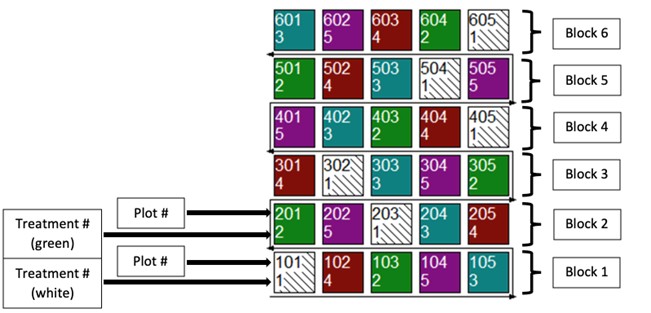
This is a full image output from ARM, indicating the entire experiment randomization in a randomized complete block design. Treatments are randomized within blocks and indicated by numbers and colors. This experiment has six reps of each treatment and therefore six blocks. Plots are numbered starting with 101 and increase by 100 for each block.
